
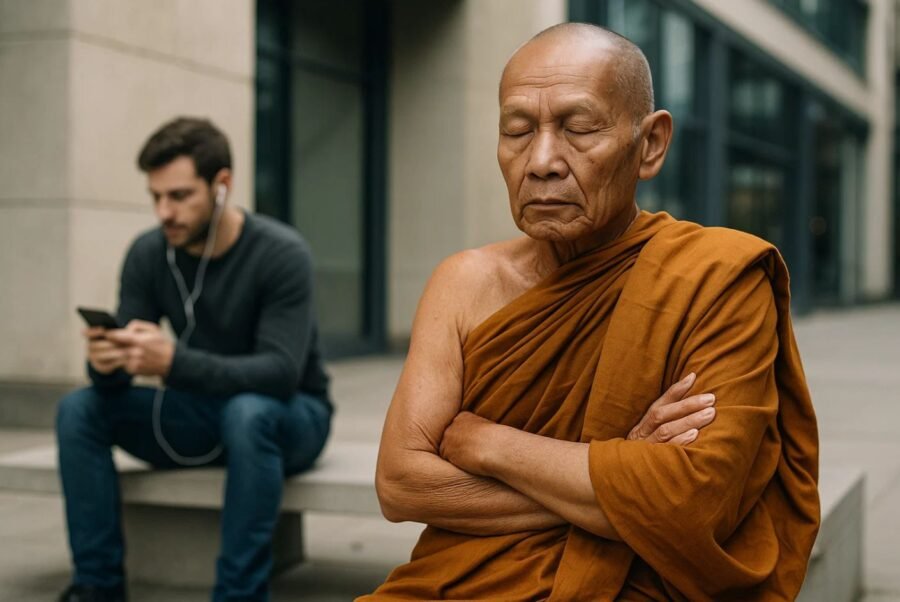
Detachment often gets a bad rap. It sounds cold, like a stoic shrug to life’s messiness. “Don’t be affected by what’s going on” can feel tone-deaf when you’re trying to heal, connect, or simply be human. But true detachment is different. It’s choosing to engage with life wholeheartedly, without letting possessions, success, relationships, or outcomes define your peace of mind.
When I turned to the Bhagavad Gita, I found a deeper, more compassionate take—one that helps you live fully, act clearly, and stop being enslaved by the very things you create. Here, I unpack a few powerful shlokas (verses) and translate them into modern, practical steps for building freedom through perspective.
1) Life Moves On — Don’t Build Identity from the Temporary
“Just as the embodied soul continuously passes from childhood to youth to old age, similarly at the time of death, the soul passes into another body. The wise are not deluded by this.” — Chapter 2, Shlok 13
Our physical body and our time in the materialistic world are fleeting when set against the vast, ever-changing universe. Within the body-mind, everything is in motion — roles, stages, and identities keep shifting.
When we anchor our sense of self in what is temporary (a job, a relationship, a role, or even our habits), every loss or disruption can feel like the end of who we are. But Krishna reminds us that the wise see continuity beyond these temporary shifts. They are not shaken by change, delays, or disruptions, because they understand the bigger picture.
For example, if someone is wrongfully fired from a job, they might turn bitter, depressed, and lose confidence. Yet, from the Gita’s perspective, a job is just one fleeting chapter. Its loss is not annihilation, but a redirection. By accepting change as constant and inevitable, we free ourselves to move forward with strength and clarity.
How to Practice detachment in daily life
Ponder:
2) Surrender with Clarity
“Give up all other duties and completely surrender to Me. I will free you from all sins and take care of you. Do not worry.” — Chapter 18, Shlok 66
Surrender here is not about passivity or weakness. It’s about loosening the grip of fear, ego, and control, and aligning yourself with trust and clarity. If you don’t believe in God, surrender can still mean opening to a higher power, the universe, nature, or even the love and support of those you deeply trust — parents, siblings, a mentor, or a close friend. The essence is the same: you surrender to an energy of love and trust.
Take an example: imagine being wrongfully fired from a job. Your first reaction may be anger, shame, or panic. Without surrender, you might spiral into self-blame (“I’m worthless”), revenge fantasies (“I’ll show them”), or fear-driven scrambling (“I’ll accept any job, even if it drains me”). With surrender, the inner dialogue changes. You pause and say: “This hurts, but I trust life is making space for something more aligned. I don’t have to carry the weight of anger alone.” You still take practical steps like updating your CV, applying for jobs, talking to people but the actions are guided by clarity, not desperation.
Surrender also calls us to introspect: “Maybe that wasn’t truly my path. If I’m so shaken by this loss, what exactly was I chasing? Was it security, status, approval?” Sometimes the pain shows us what we were clinging to and that it might not be for us. From that realization, you can turn toward what is genuinely aligned, rather than holding onto what life is asking you to release.
In that shift, surrender becomes strength. It turns a painful ending into an opening.
How to Practice detachment in daily life
Ponder:
3) Work, But Don’t Be Owned by Outcomes
“You have a right to perform your prescribed duties, but you are not entitled to the fruits of your actions…” — Chapter 2, Shlok 47
This shloka is one of my favourite ones to practice to be unmoved by wins or failures. It teaches the balance between effort and attachment. You are encouraged to give your best to whatever you do, but not to let your sense of self-worth depend on results. Outcomes are influenced by factors beyond your control — timing, circumstances, people and multiple factors outside our control and surrendering attachment to them will bring a sense of freedom.
When you focus on effort rather than outcome, you cultivate a sense of presence, peace, and gratitude in the project or activity you are doing. You stop chasing or avoiding tasks out of fear of failure or perfectionism. Over time, work becomes an expression of joy and flow rather than stress and obligation which is the essence of a balanced life.
For example, if you are writing a book, instead of setting the goal “Publish a bestseller” (outcome), set a process goal: “Write 500 words a day.” Celebrate showing up and completing the effort. Focusing on the process keeps you motivated and reduces anxiety over results. It may sound simple, but I can testify that it is not. Practicing this daily, with gratitude for what you were capable of that day, gradually builds detachment from larger, uncontrollable outcomes.
How to Practice detachment in daily life
Ponder:
The Bhagavad Gita teaches detachment as freedom — the freedom to live with love, courage, and clarity without being chained to fear, ego, or fleeting outcomes. When you practice detachment, you’re not running away from life. You’re learning how to stand steady in the middle of it.
FAQs on Detachment and the Bhagavad Gita
1) What does the Bhagavad Gita teach about detachment?
The Gita teaches that detachment means focusing on your duty and actions while letting go of attachment to outcomes. It’s about freedom, not indifference.
2) How can I practice detachment in daily life?
Start by setting process goals instead of outcome goals, pausing before reacting, and observing your emotions without clinging to them.
3) Is detachment the same as not caring?
No. Detachment is not about apathy. It’s about caring deeply while staying balanced, so you are not destroyed by loss or inflated by success.
4) How is detachment relevant in relationships?
It helps you love fully without trying to control another person. You can support and connect without making their choices define your worth.
5) Why is detachment important for mental health?
Detachment reduces stress, anxiety, and overthinking by breaking the cycle of obsessive control over results. It builds resilience, peace, and inner freedom.
Let’s Connect
If you’d like to explore how to practice detachment and apply ancient wisdom in modern life, relationships, and family, we’d love to hear from you. Reach out to us via WhatsApp or fill in our Contact Form — we love connecting with like-minded people on this journey.
Serenova Coaching copyright ©2026. All rights reserved. The brand, logo, and its content are copyrighted. For more details, please read our Privacy Policy.