
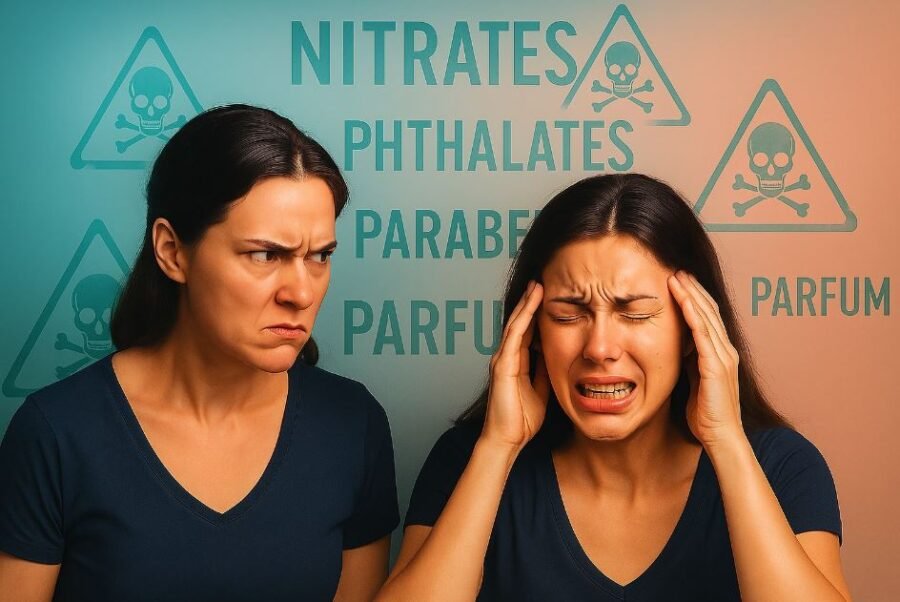
Ever wondered why deodorant never really took off in India? Honestly, it wasn’t part of my upbringing. My parents didn’t use it, and the closest we got to managing sweat was a sprinkle of talcum powder. I first tried deodorant at school, an English-medium school, when a teacher casually introduced it at age fourteen. And then for years, I used deodorants as I was into sports, hiking, adventure, gymming—you name it. But now? I don’t. And guess what? I smell perfectly fine. A clean shower and keeping sweat-prone areas hygienic is all it takes. My skin is also more sensitive these days, and even occasional deodorant use causes itching. I also avoid spraying fragrance directly on my body.
Here’s the truth: good hygiene beats chemicals every time. Clean underarms and private areas mean your body doesn’t need chemical-laden deodorants to begin with. The reason – many everyday cosmetics, deodorants, and skincare products hide ingredients that can disrupt your hormones. Phthalates, nitrates, parabens, BPA… these aren’t just scary words. They can quietly affect women’s health, hormonal balance, and conditions like PCOS.
It’s not about fear—it’s about awareness. The choices we make today about what goes on and into our bodies can support a healthier, more balanced tomorrow.
Phthalates are chemicals that make plastics more flexible and help fragrances last longer. In cosmetics, they’re often tucked away inside the vague word “fragrance” or “parfum.” Because of trade secret laws, companies don’t have to reveal exactly what’s in these blends.
Here’s the issue: phthalates are endocrine-disrupting chemicals (EDCs). They mimic estrogen, the primary female sex hormone, and throw off your body’s natural hormonal rhythm. These estrogen-mimicking compounds bind to estrogen receptors in your cells, sending false signals that can disrupt your menstrual cycle, fertility, and overall hormonal balance.
Phthalates and nitrates are just the beginning. Several other hormone-disrupting chemicals are commonly found in cosmetics, personal care products, and even household items:
Tip: Always read labels, choose fragrance-free products, and prefer certified clean beauty brands to reduce exposure to these hidden hazards.
Nitrates themselves aren’t always directly harmful, but in cosmetics, they can react with other compounds to form nitrosamines—classified as probable human carcinogens.
Health risks include:
How to avoid them:
The beauty industry isn’t always transparent. But you can reclaim your health by making mindful swaps:
If you’re looking to make safer swaps, there are excellent clean beauty options both in New Zealand and India. In NZ, brands like Ethique, Anihana, and Grahams Natural stand out for their commitment to transparency, plastic-free packaging, and formulations free from parabens, phthalates, and synthetic fragrances. In India, you can explore Juicy Chemistry, Caveman Naturals, and Parama Naturals, which craft deodorants and soaps with organic, ayurvedic ingredients, free from aluminum and hidden toxins. Choosing these kinds of companies not only supports your wellness but also encourages an industry shift toward honesty and sustainability.
*Please do your own research before using these products. Not sponsored – I have used some of these for my personal use.
|
Activity |
Natural Alternative / DIY Option |
Notes / Tips |
|
Face wash |
Water or gentle natural soap |
Avoid harsh chemicals; rinse with lukewarm water |
|
Toothpaste |
Baking soda + coconut oil + peppermint oil |
Optional: add xylitol for sweetness |
|
Lip care |
Beetroot + vaseline/coconut oil lip balm |
Natural tint and hydration |
|
Deodorant |
Coconut oil + baking soda + arrowroot powder + essential oil |
Apply pea-sized amount under arms |
|
Moisturizer / Face |
Coconut oil, almond oil, or jojoba oil |
Use sparingly; patch-test first |
|
Body moisturizer |
Whipped shea butter + coconut oil + essential oils |
Optional: vitamin E oil for extra nourishment |
|
Fragrance / Perfume |
Essential oil + carrier (vaseline/coconut oil) on pulse points |
Lavender, rose, sandalwood, citrus; subtle and natural |
|
Hair care |
Coconut oil or avocado hair mask (30–60 min) |
Do 1–2 times per week |
|
Fabric care / freshener |
Spray water + a few drops of essential oils on clothes |
Natural scent without synthetic perfumes |
|
Hydration / Refresh |
Rose water or hydrosol spritz |
Cooling and lightly scented |
|
Lip care touch-up |
Beetroot lip balm |
Reapply as needed |
|
Sleep prep |
Optional: dab essential oil mix on pulse points or pillow |
Lavender, chamomile, or sandalwood for calming effect |
|
Hair care rinse |
ACV rinse (1:3 ACV:water) if needed |
1–2 times per week for shine and scalp balance |
When you live with conditions like PCOS, endometriosis, or thyroid imbalances, even small disruptions in your hormonal system can feel amplified. What goes on your skin eventually goes into your bloodstream. Every product you choose is either helping your body or adding to its toxic load.
And the truth is, women deserve better.
If you’ve ever wondered whether your beauty routine could be working against your health—this is your sign to pause and look closer.
1) How do toxic ingredients in cosmetics affect women’s hormones?
Toxic ingredients like phthalates, parabens, and BPA act as estrogen mimics, sending false signals to your hormone receptors. Over time, this can disrupt menstrual cycles, fertility, and increase risks of conditions like PCOS, endometriosis, and thyroid imbalances.
2) Can phthalates or parabens in beauty products cause PCOS or fertility issues?
Yes. High exposure to these chemicals has been linked to PCOS, reduced fertility, and other reproductive challenges because they interfere with your body’s natural estrogen signaling.
3) What are estrogen-mimicking compounds in skincare and makeup?
Estrogen-mimicking compounds are chemicals that behave like estrogen in the body. Common ones include phthalates, parabens, and BPA. They bind to estrogen receptors, tricking the body and potentially causing hormonal imbalances, menstrual irregularities, or reproductive issues.
4) Which beauty products should women avoid to protect hormonal health?
Watch out for products that contain: Phthalates (hidden in fragrance), Parabens (methylparaben, propylparaben, butylparaben), BPA/BPS/BPF, Nitrosating agents (can form nitrosamines) and PFAS, lead, and flame retardants
Choosing fragrance-free, certified clean, and transparent brands is the safest approach.
5) Are clean beauty products really safer for women’s wellness?
Yes. Products certified by organizations like EWG, Made Safe, or Think Dirty are formulated to avoid endocrine-disrupting chemicals, estrogen mimics, and harmful preservatives, making them safer for long-term hormonal health and overall wellness.
If you want to read more about the studies, I have added some of the recent research:
At Serenova Coaching, I help women build awareness around their wellness choices, reduce anxiety around health, and design habits that create calm, balance, and resilience. Reach out if you’d like support in making these shifts via WhatsApp or Contact Us form. Together, we’ll simplify, detoxify, and bring your health back into alignment.
Serenova Coaching copyright ©2026. All rights reserved. The brand, logo, and its content are copyrighted. For more details, please read our Privacy Policy.