
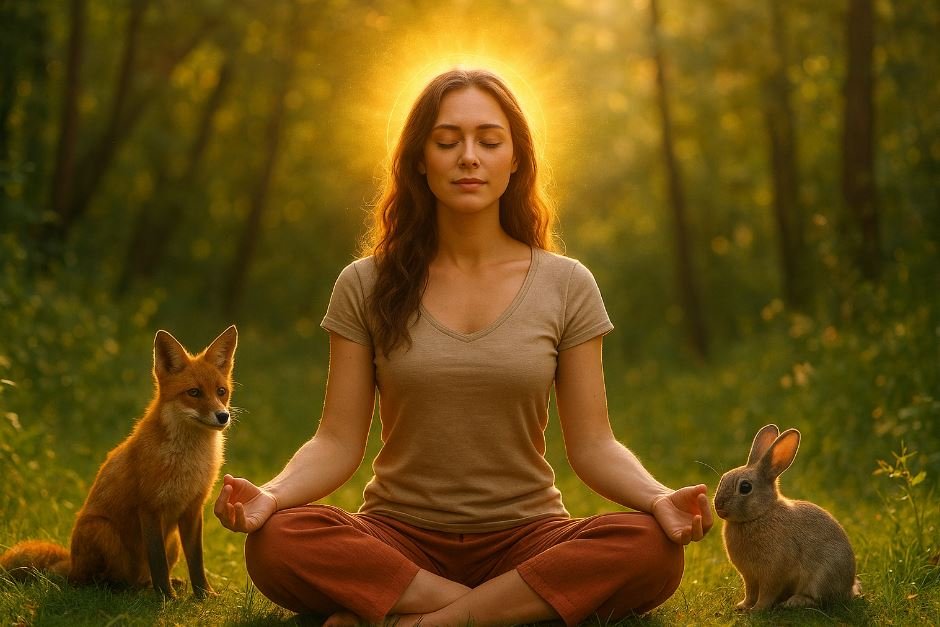
When we think of spirituality, we often picture meditation, chanting, or religious rituals. But true spirituality goes deeper—it’s your personal connection with something beyond your everyday identity: your inner being, your soul, or pure consciousness.
Spirituality is not about escaping life; it’s about being fully present in it. It means seeing everyday experiences as sacred, infused with awareness, meaning, and connection.
One of my friends described spirituality beautifully: it’s when you disappear into something deeper than yourself and follow your intuition instead of a GPS. I feel this flow state when I meditate, do yoga, mindfulness walks, reading and writing. In this flow state, the mind quiets, the inner voice softens, and you drop into your essence whether you call it the soul, presence, or the Divine. This connection naturally deepens empathy, compassion, and a sense of care for others.
Spiritual growth is not linear. There are no levels or timelines; just a lifelong process of awakening, integrating, and returning to balance. You’ll experience highs and lows, peace and discomfort, clarity and confusion. This is all part of the soul’s evolution.
You don’t need to live in an ashram to grow spiritually. Start where you are, with small, intentional practices that nourish your soul.
Spend a few minutes each day in silence, simply observing your breath. Whenever possible, join group meditations—they create a high-vibration setting that fosters deeper connection to your soul and the Divine.
Regulate your breath to balance energy. Practice techniques like Pranayama or the Wim Hof Method. Explore deep breathing, breath holds, and longer exhales for relaxation and nervous system support.
Reflect on who you are and what truly matters. Journaling helps you express thoughts, release mental clutter, and tap into deeper clarity and creativity.
Focus on what’s already working in your life. Saying “thank you” daily rewires your mindset and leaves little space for sadness or negativity.
Connect with the elements and ground yourself. As you walk, observe leaves, smell flowers, and imagine roots growing from your feet into the Earth. This visualization calms the mind and connects you to Gaia.
Practice compassion through kindness, donations, or supporting others in need. Giving fosters humility, gratitude, and a sense of collective humanity.
Take time away from external noise to reconnect inwardly. Silence recharges your energy and helps clear mental and emotional clutter, aligning you with your soul’s voice.
These small but powerful steps build inner strength, clarity, and awareness. Over time, they awaken your intuition and deepen your spiritual presence.
Spirituality often arises in the simplest of moments like walking through a forest, watching sunlight on leaves, writing, singing, dancing, or sharing a silent smile. It may emerge in joy or grief; any moment that makes you feel deeply connected to life.
In these moments, the illusion of separation dissolves, and you feel a sense of oneness. That’s the heart of spirituality: being so fully present that you realize you were never separate from life to begin with.
You can also explore the yogic path for deeper spiritual development, learn more in our blog: Beginner’s Guide to Yoga: Everything You Need to Know to Get Started
If you’re feeling lost, stuck, anxious, or disconnected from your purpose—your spiritual path is calling you home.
At Serenova Coaching, we guide you back to your authentic self through:
Book a one-on-one session or a free discovery call via WhatsApp or our Contact Form. Start your journey toward clarity, peace, and soul alignment today.
Serenova Coaching copyright ©2026. All rights reserved. The brand, logo, and its content are copyrighted. For more details, please read our Privacy Policy.